Monarch Butterflies
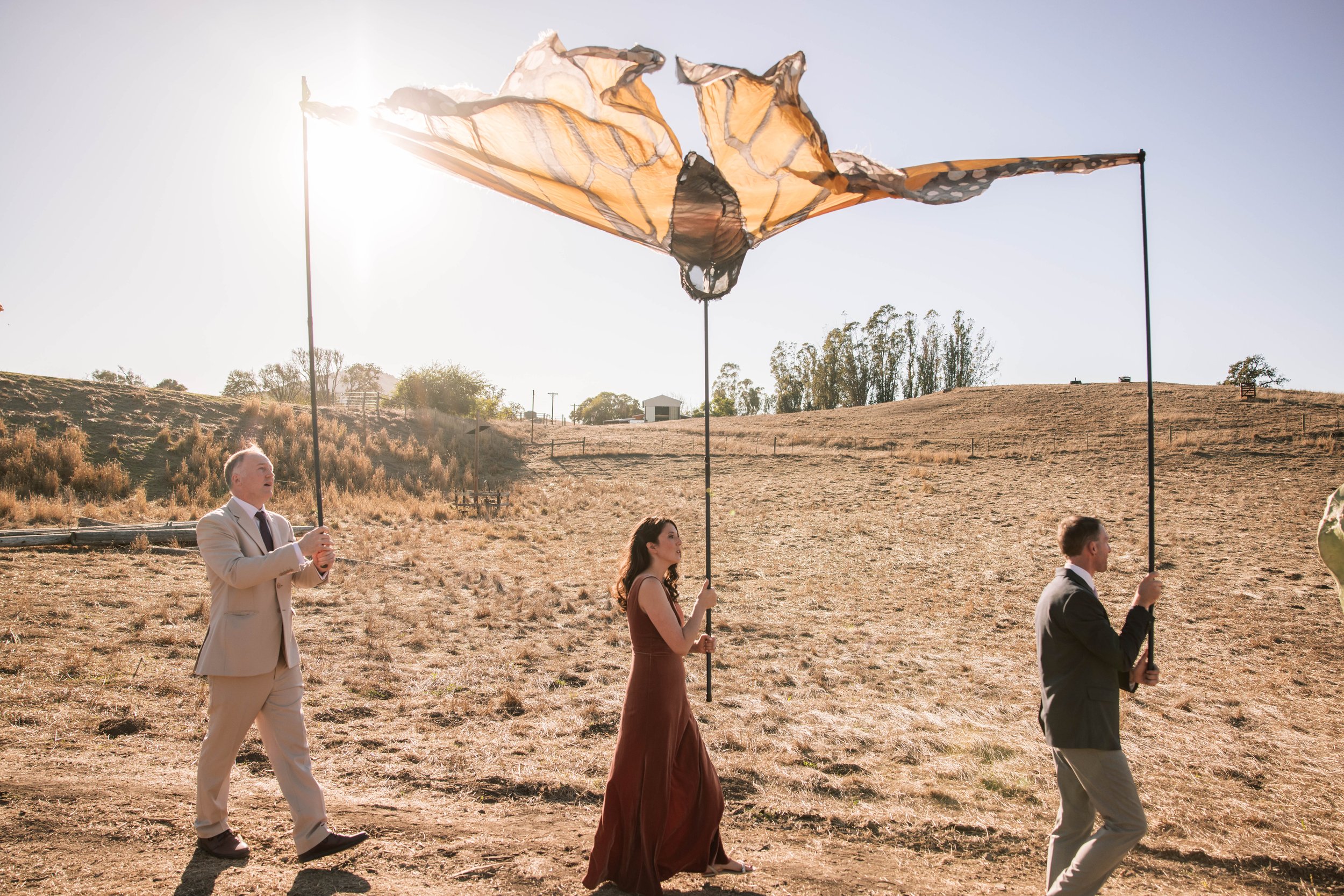
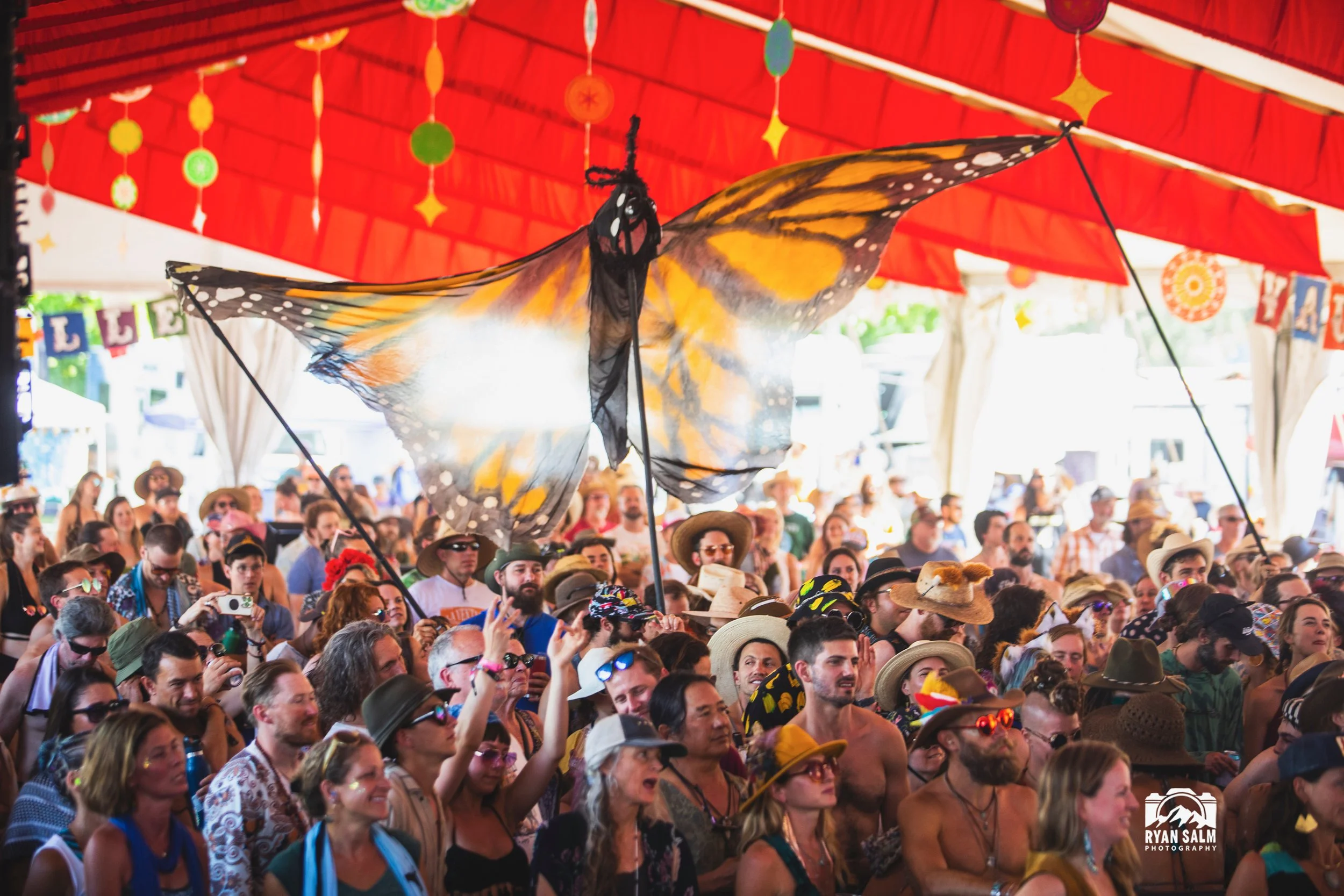
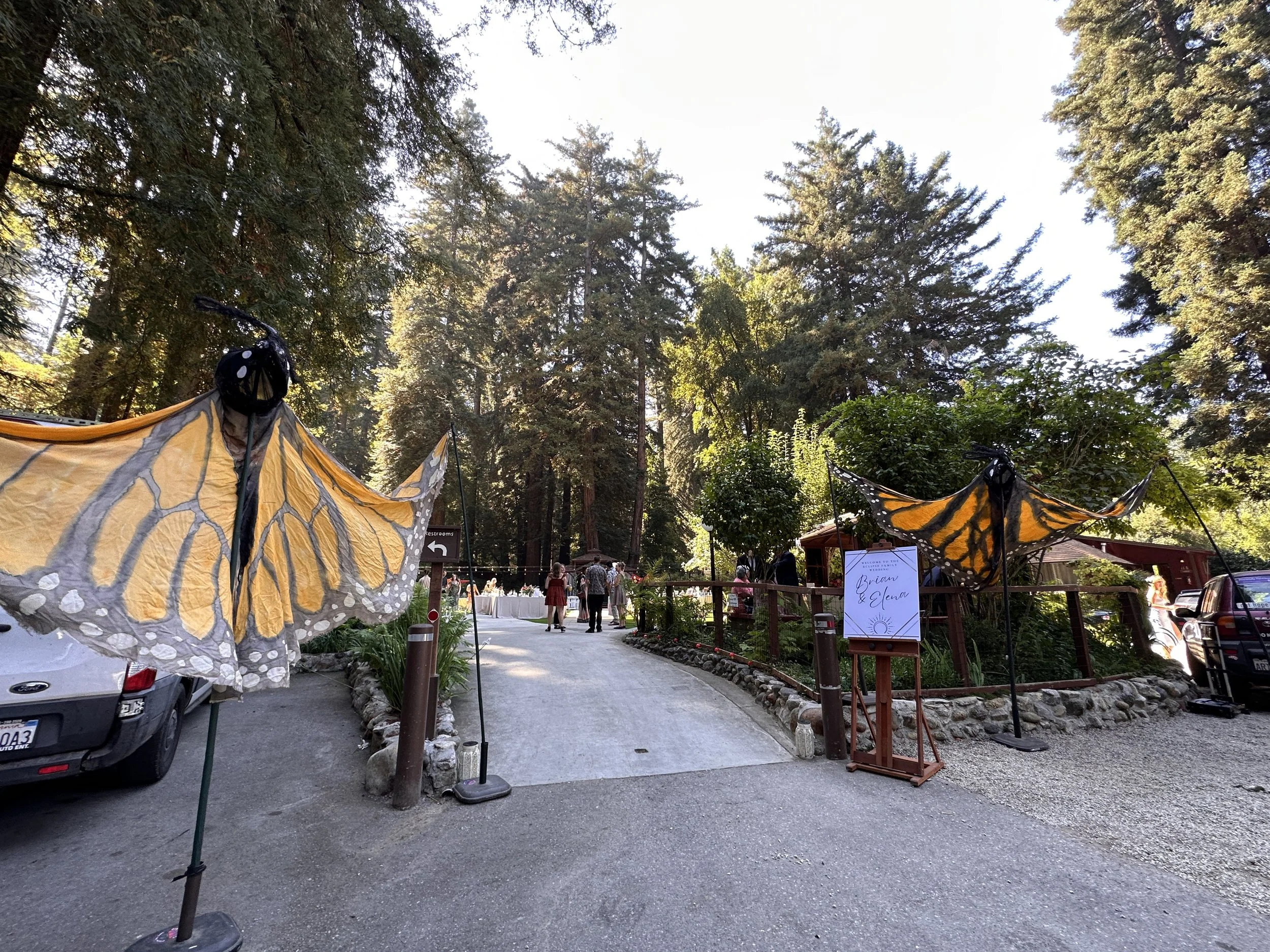
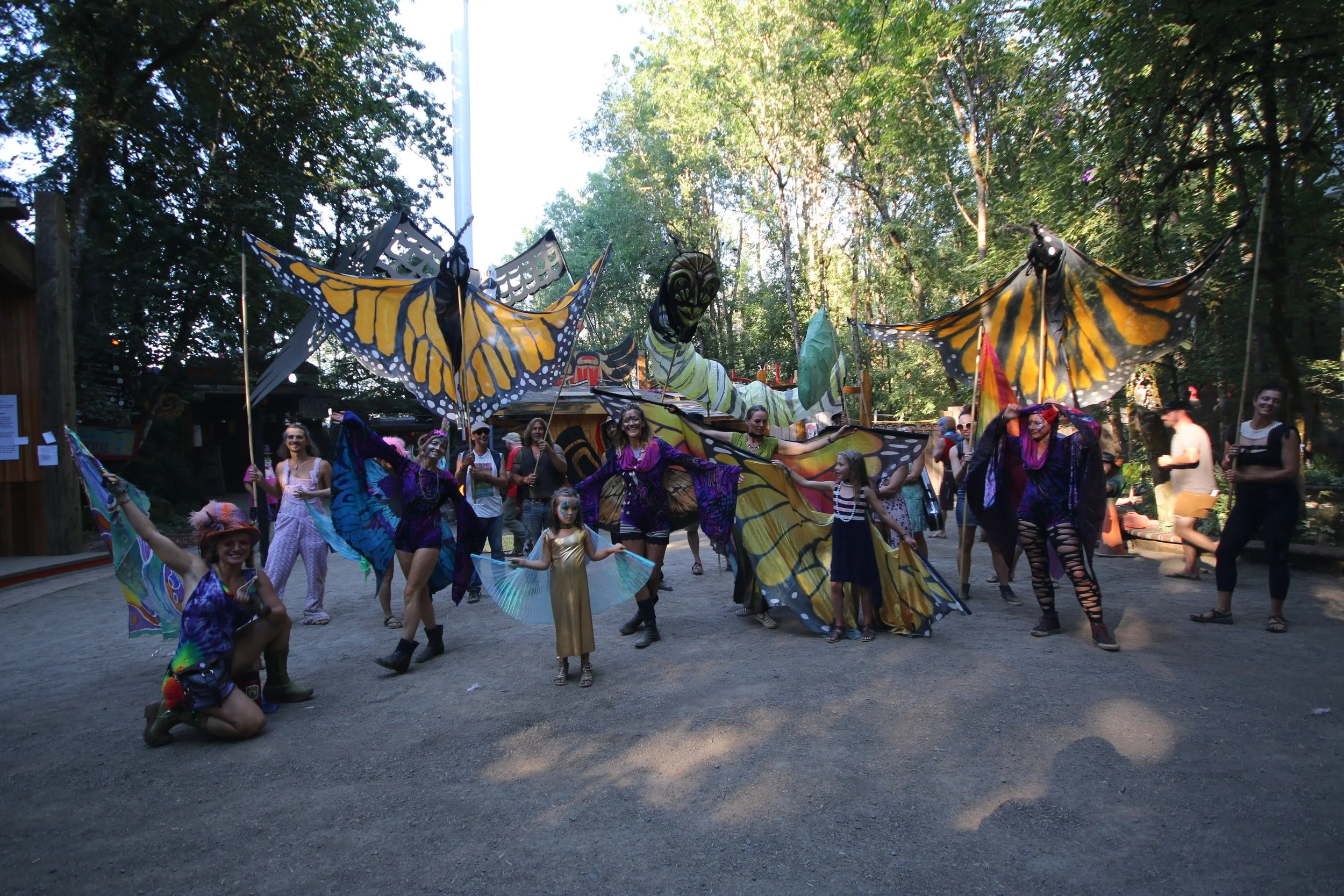
The Monarch Butterflies are a pair of giant, hand-painted silk puppets created by Toni Mikulka-Chang as part of the Monarch Butterfly lifecycle series. This series was developed to highlight cycles of life, transformation, and the fragile beauty of the monarch, while also calling attention to the urgent need to protect pollinators and the ecosystems they depend on.
These two butterflies were designed as moving symbols of migration, continuity, and connection. Their long annual journey from Central to North America makes the monarch a powerful emblem of borderlessness and shared ecological responsibility across human-made boundaries.
Materials & Construction
The Monarch Butterflies combine fine textile work with lightweight sculptural techniques:
Wings: Made from hand-painted silk using silk sourced from a regenerative, sustainable farm in India
Heads: Sculpted from reed with papier-mâché eyes
Structure: Lightweight internal supports designed for pole operation
The silk is treated and set to create a luminous, translucent surface that moves and catches light beautifully in both daylight and evening performances.
Scale, Movement & Performance
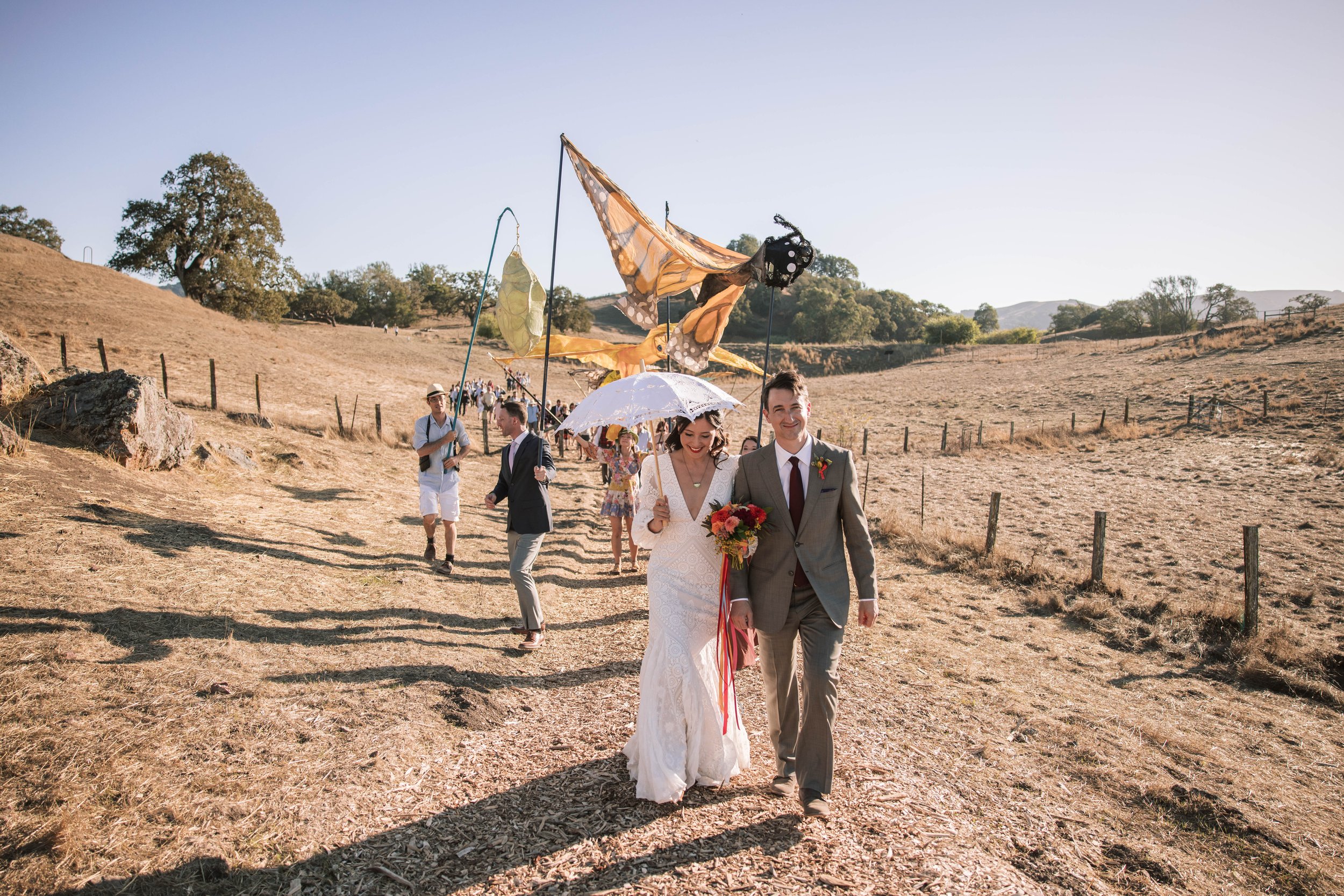
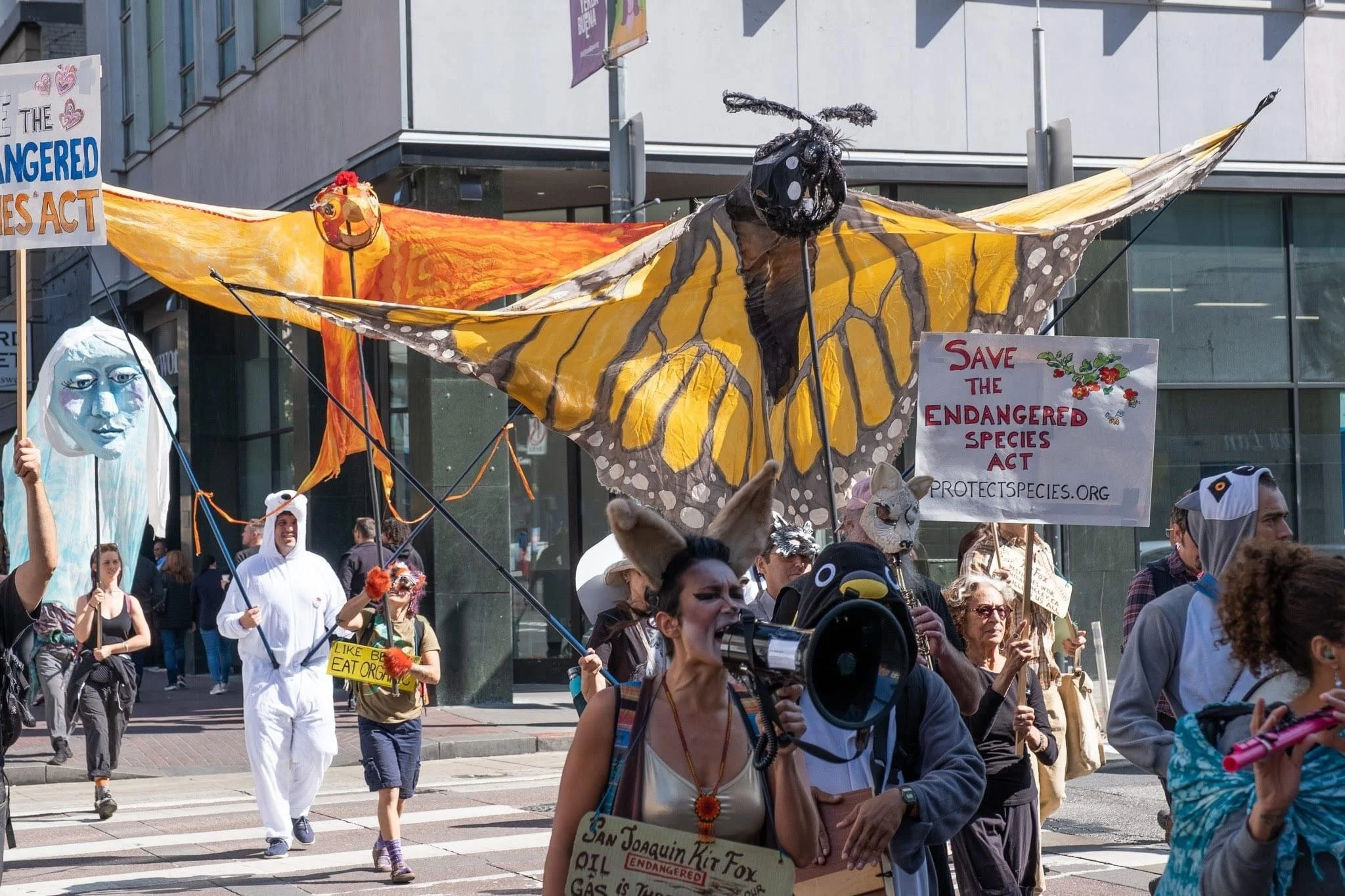
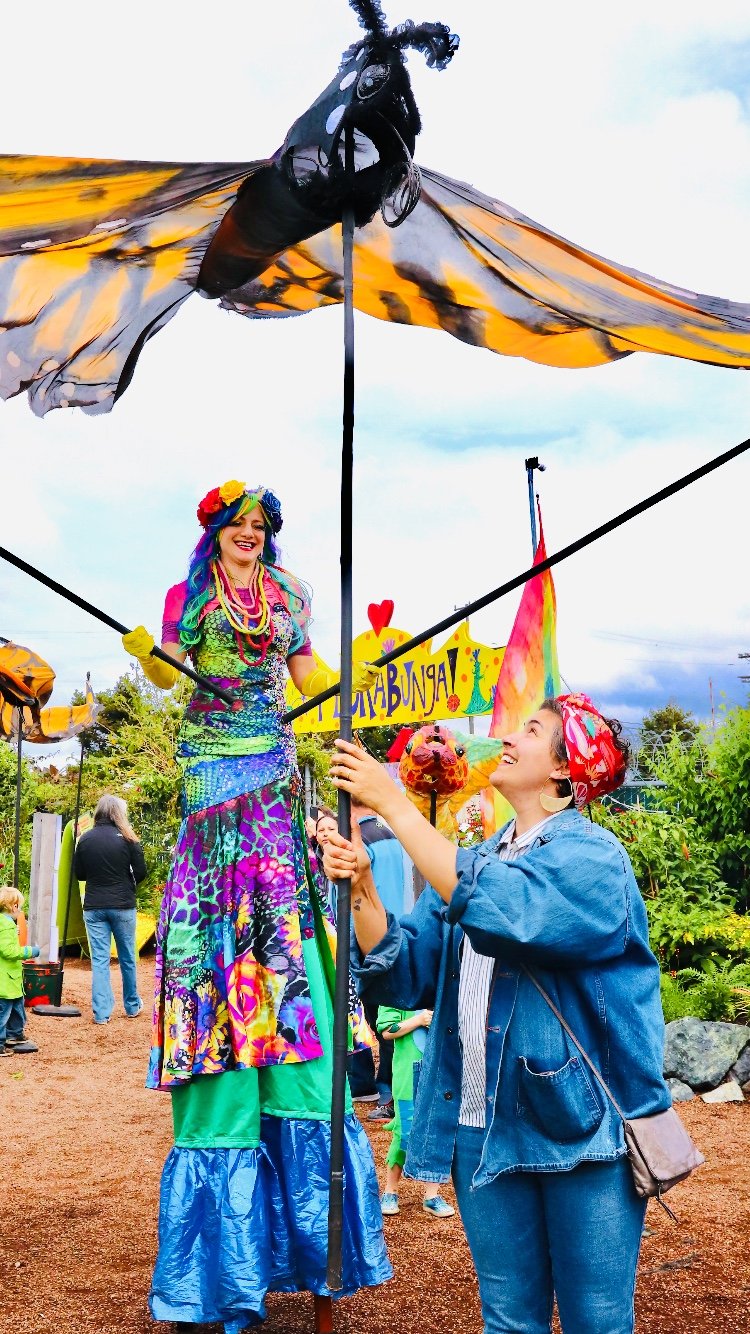
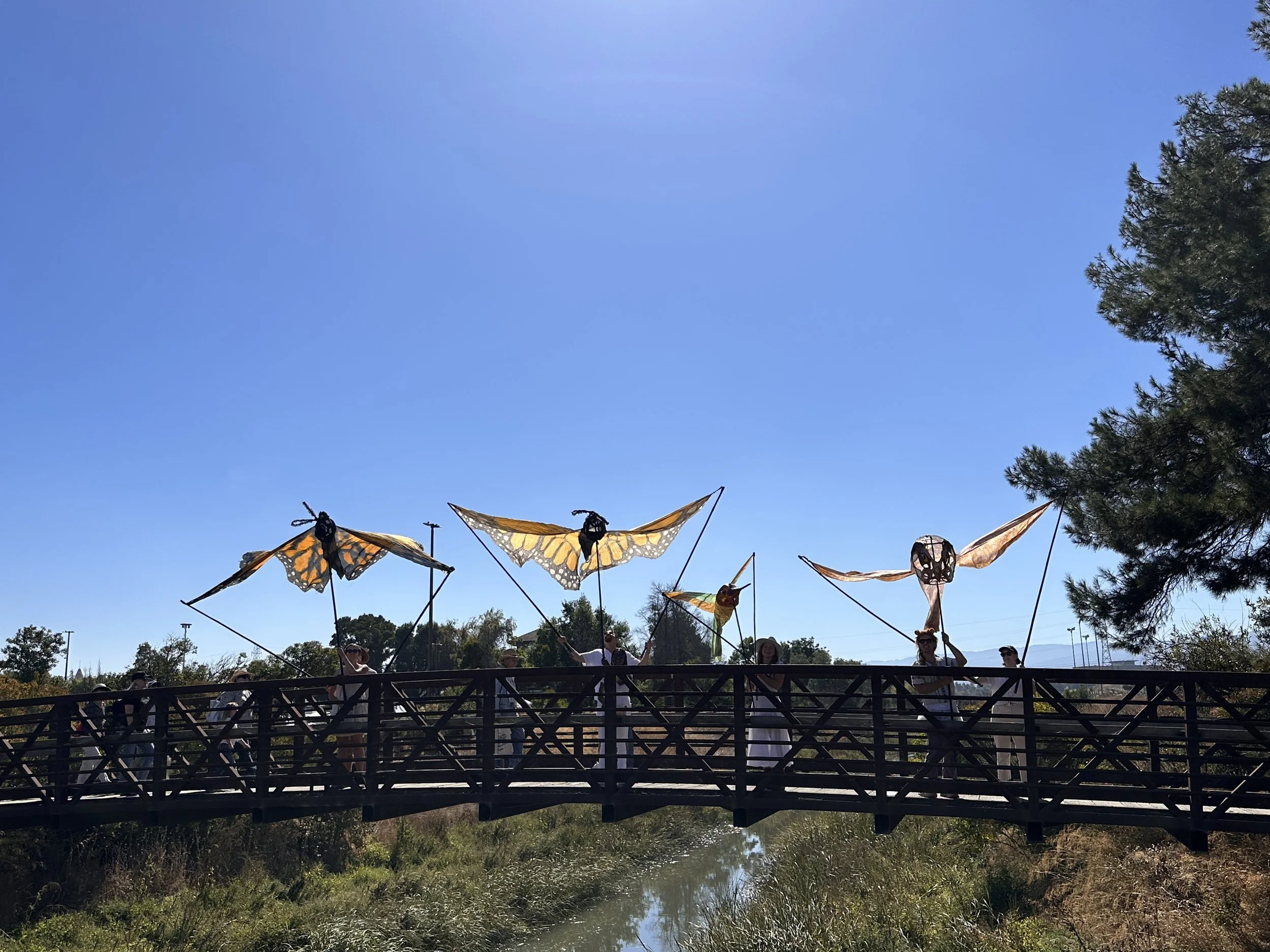
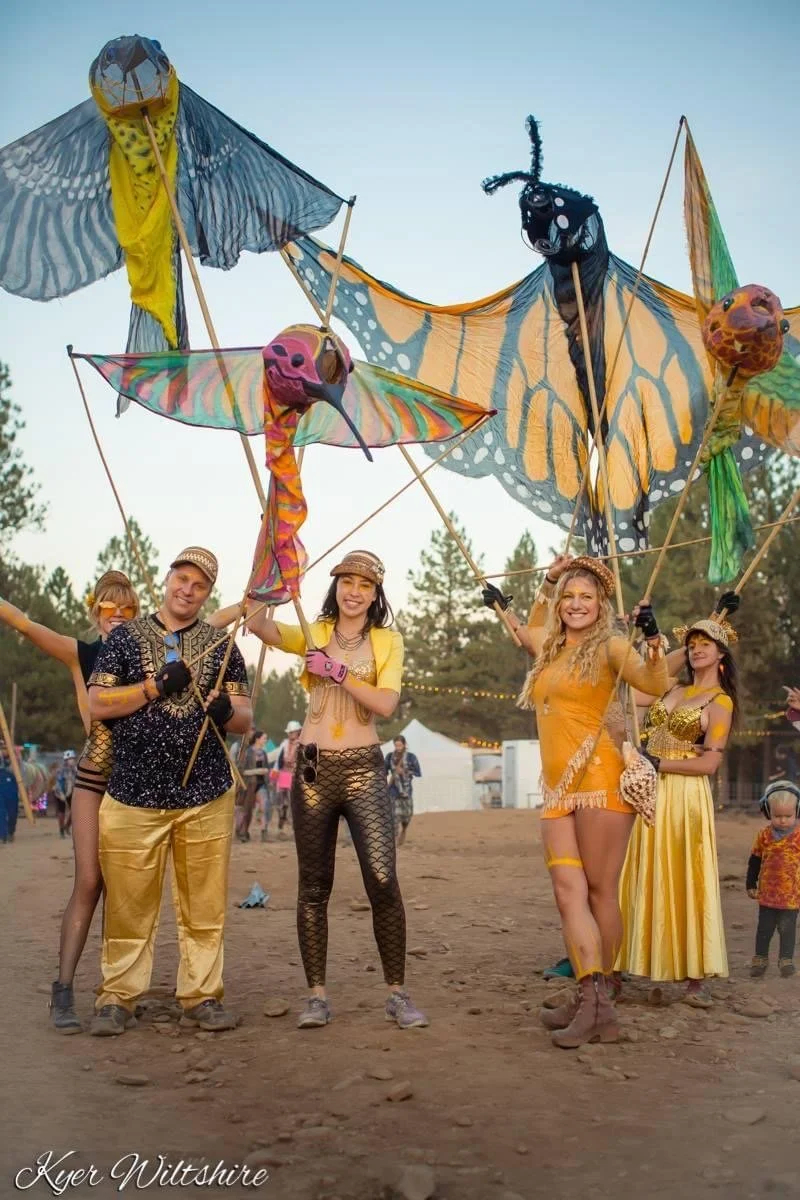
Each butterfly has a wingspan of approximately 9 feet. They are animated using bamboo poles or telescoping fiberglass poles and are typically puppeteered by two or three performers working together. This allows for nuanced, floating, gliding, and gently beating wing movements.
When performed together, the two butterflies create a strong sense of travel and continuity, echoing the epic, multi-generational migration of real monarchs across continents.
Purpose & Ongoing Life
The Monarch Butterflies were created to make visible the idea that ecological systems do not follow political borders. Their performances emphasize migration, interdependence, and the shared responsibility to protect the fragile networks of life that connect regions, countries, and communities.
As part of ArtJoy’s Giant Puppets Save the World collection, the Monarch Butterflies continue to appear in parades, installations, and educational performances focused on pollinators, habitat protection, and environmental stewardship.