Hummingbirds
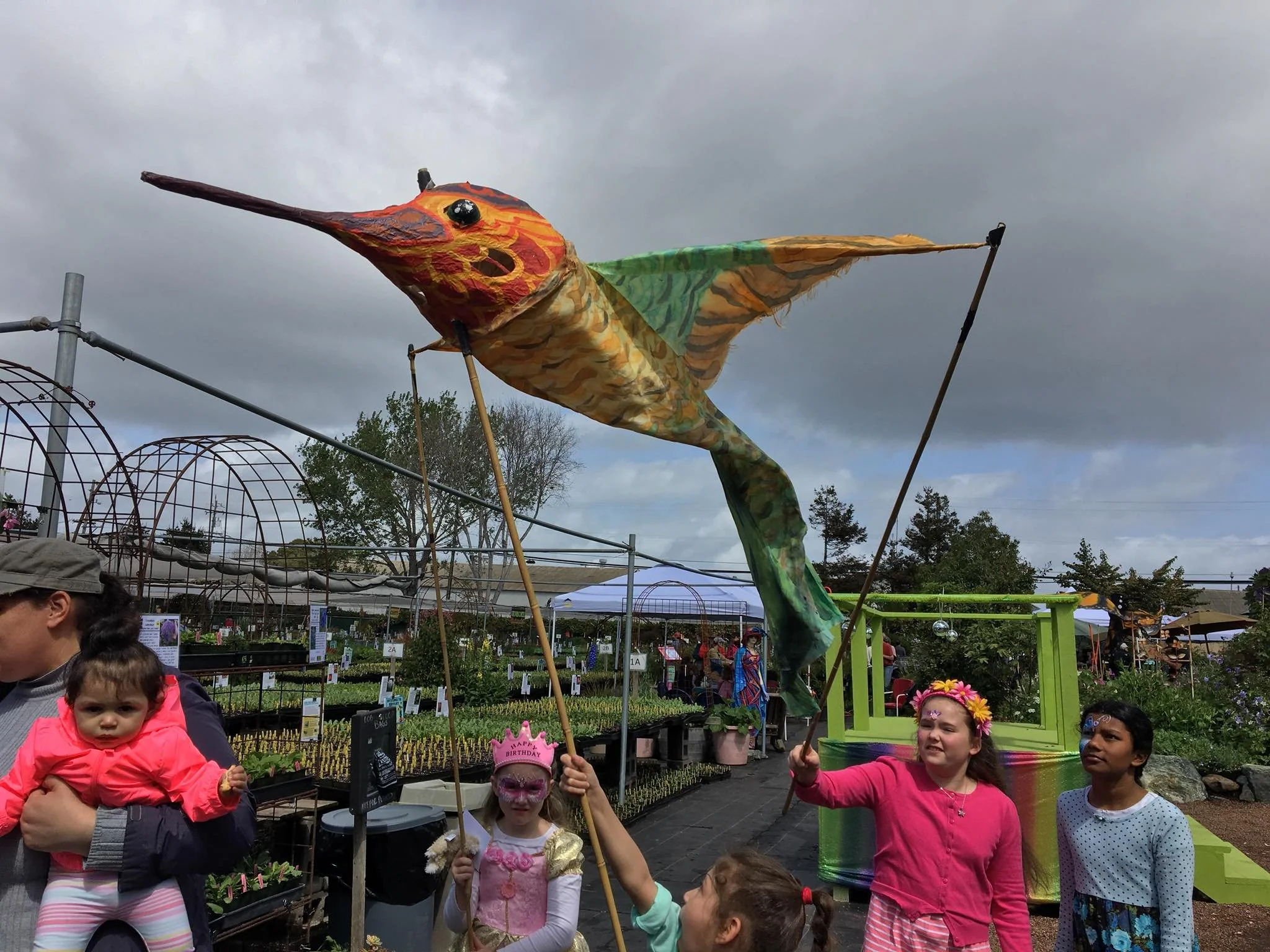
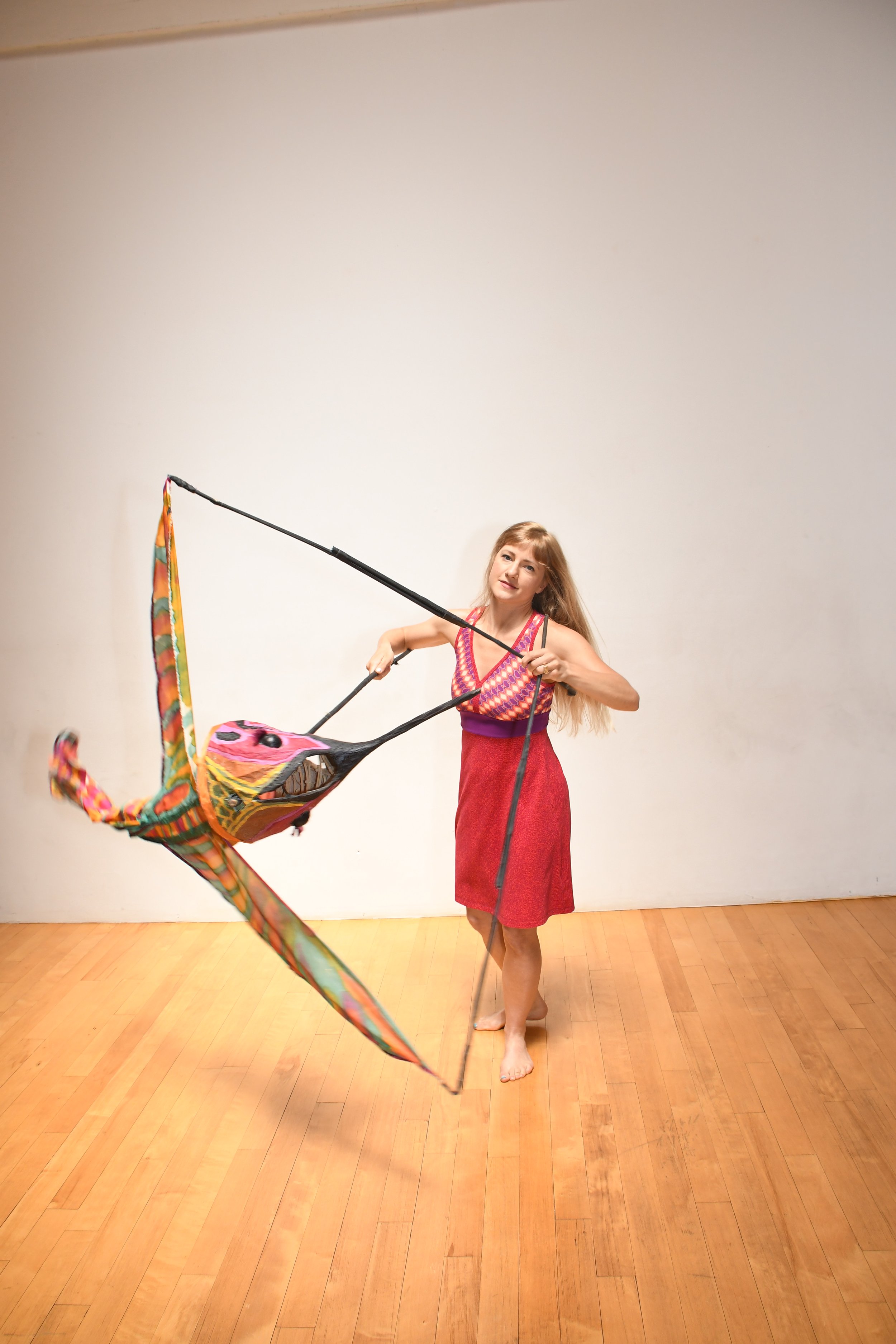
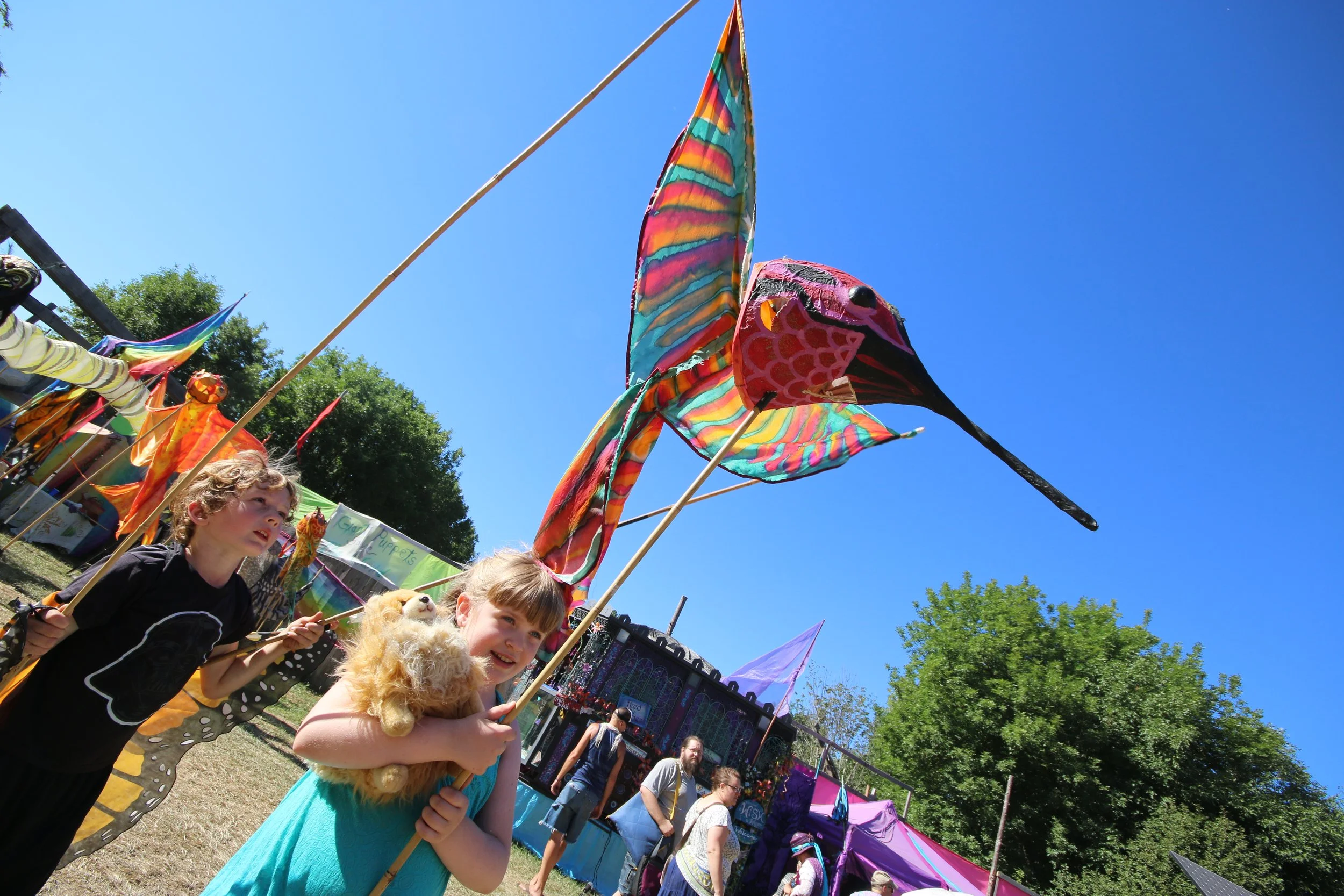
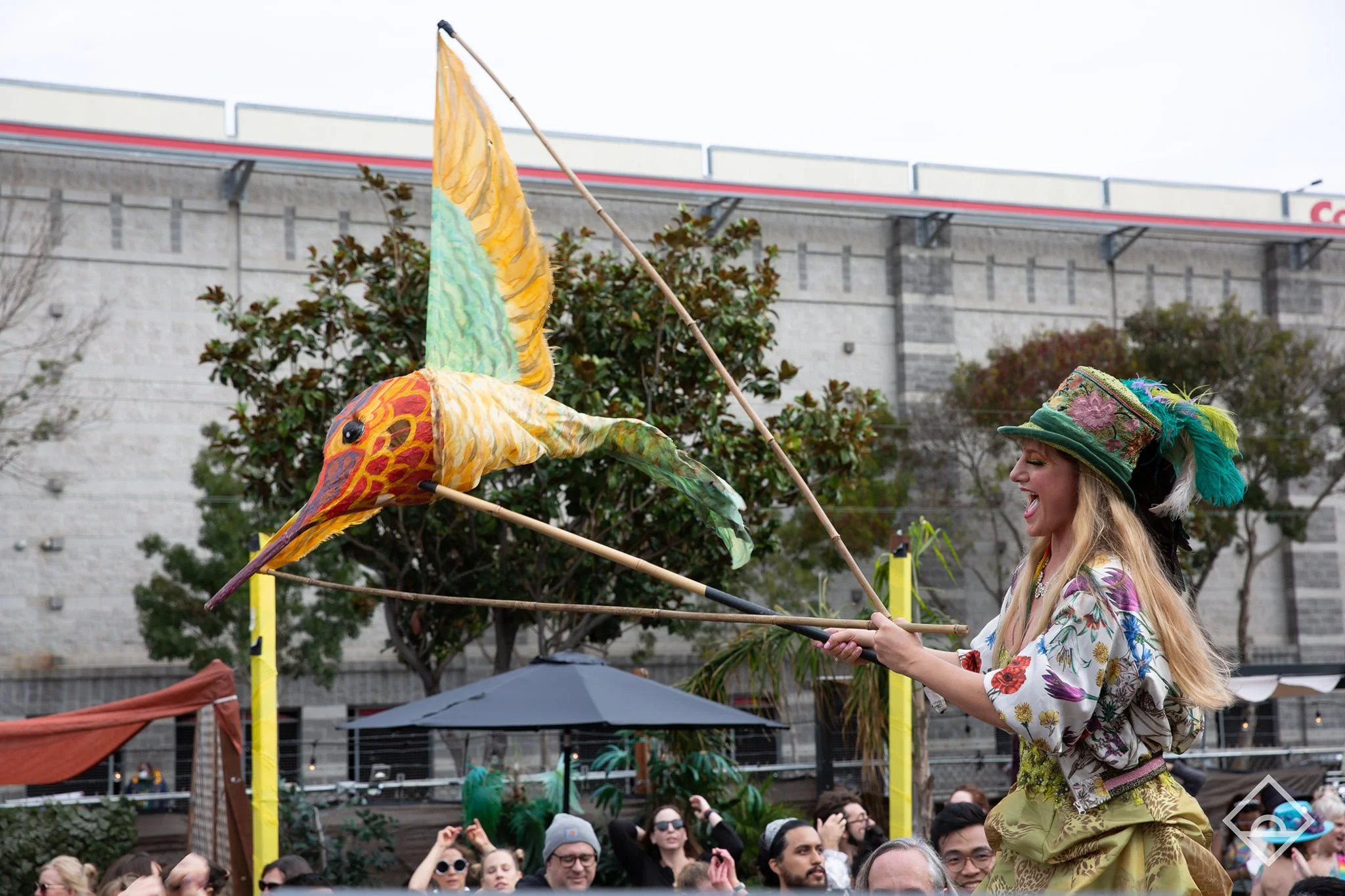
The Hummingbirds are a growing series of giant bird puppets created by Toni Mikulka-Chang in the years following the passing of her father and grandparents. These puppets were conceived as a way to honor memory, continuity, and transformation, and to represent the idea of spirits returning in new forms—light, fast, and full of motion.
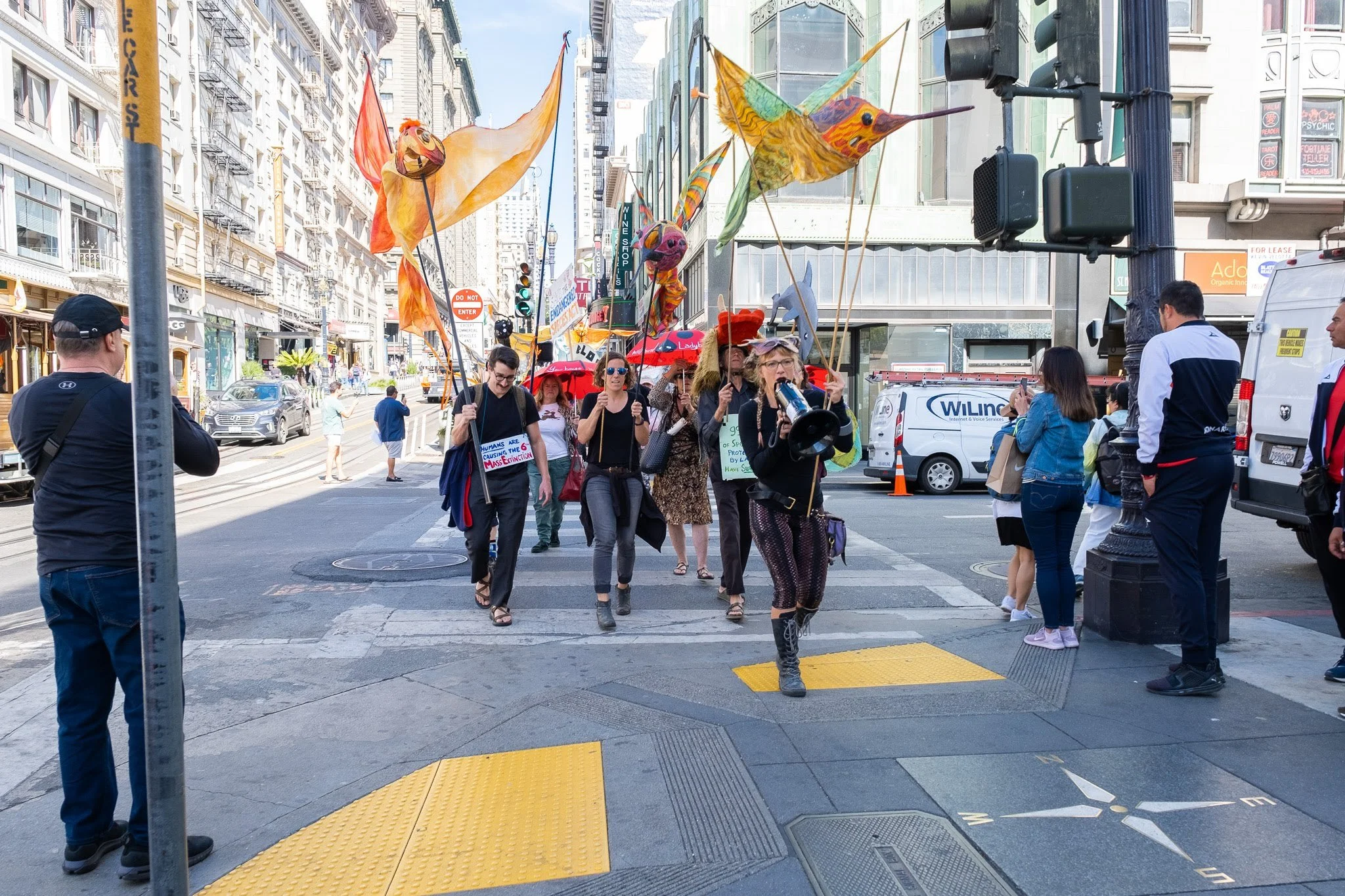
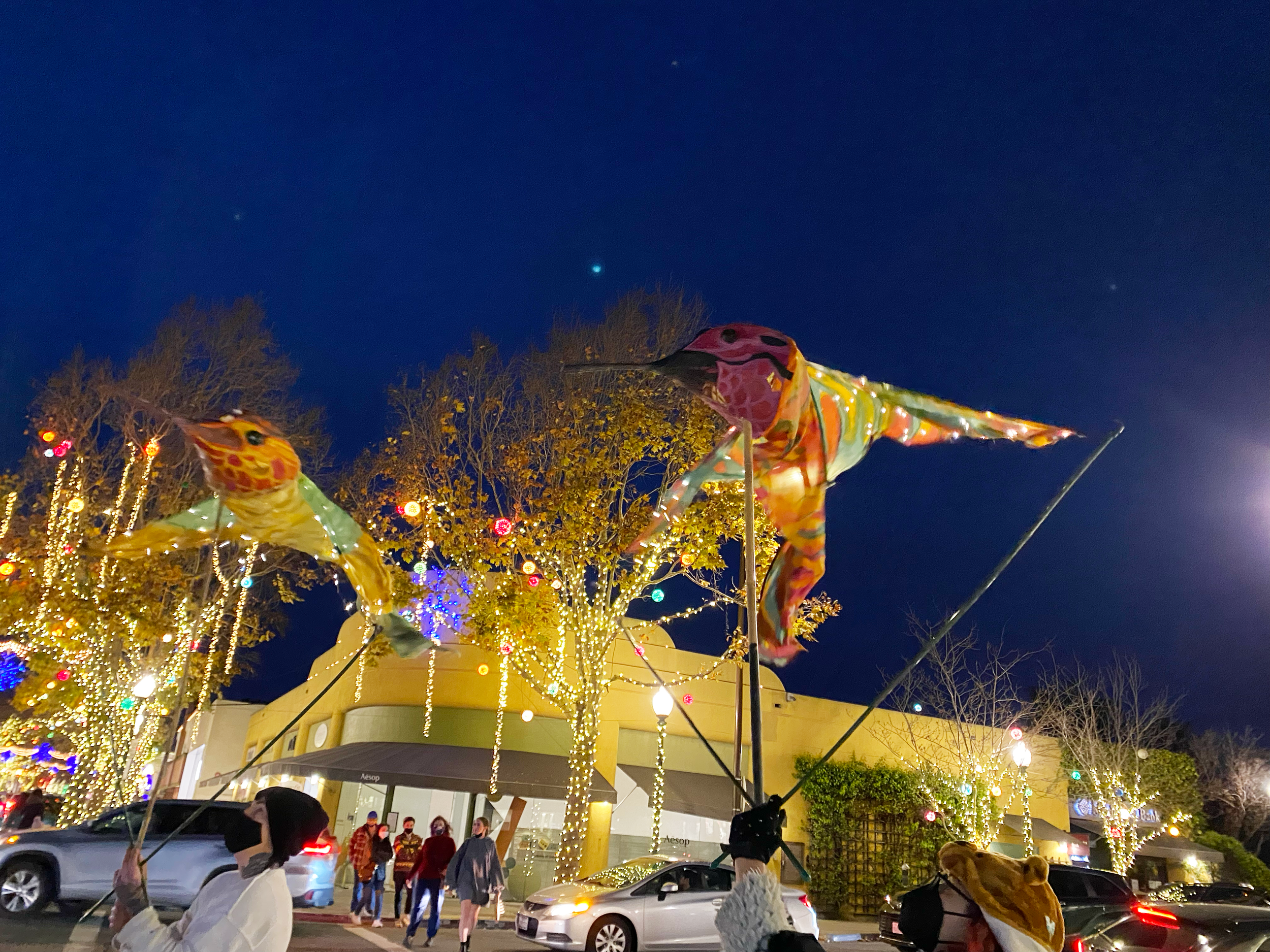
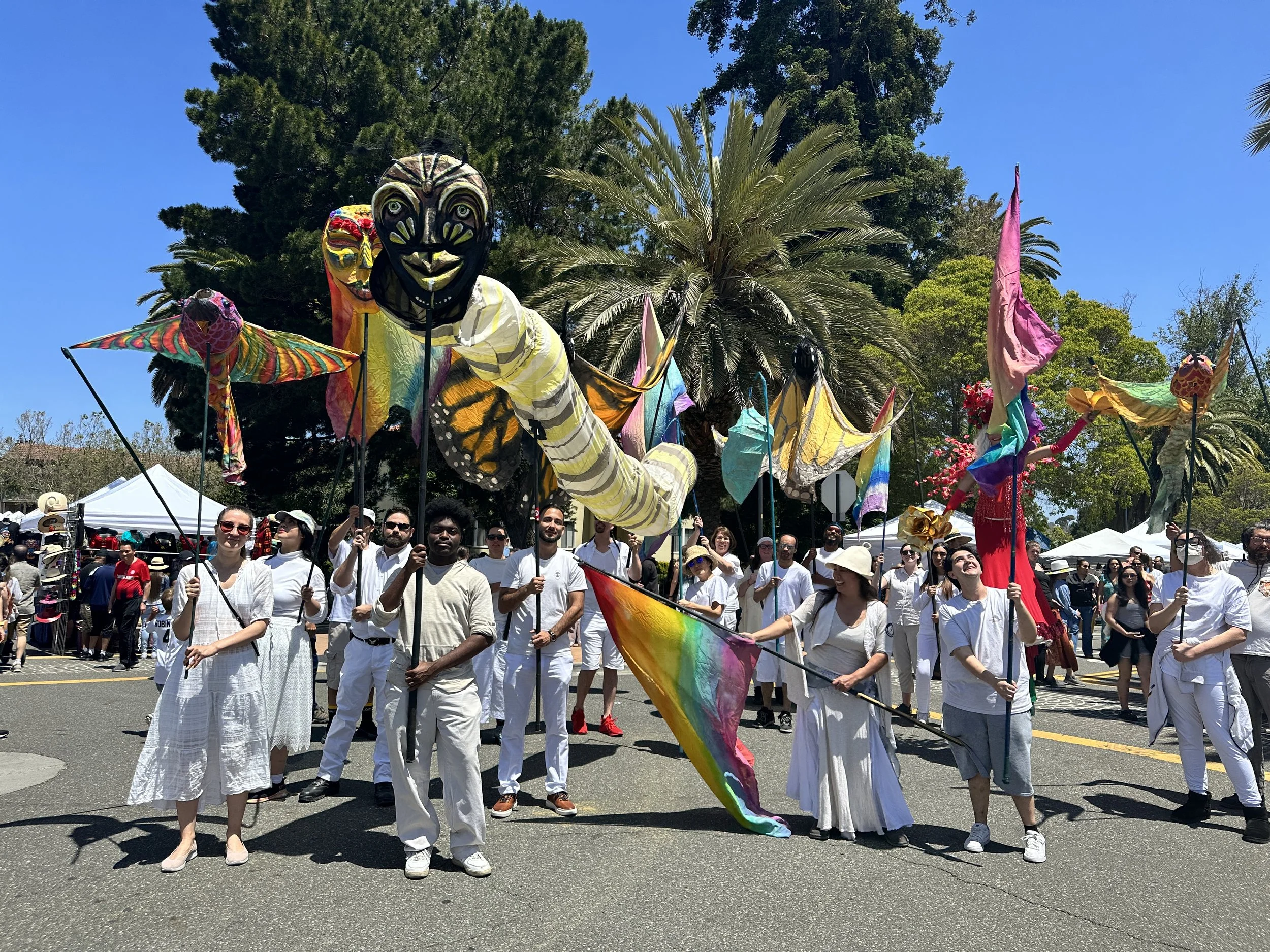
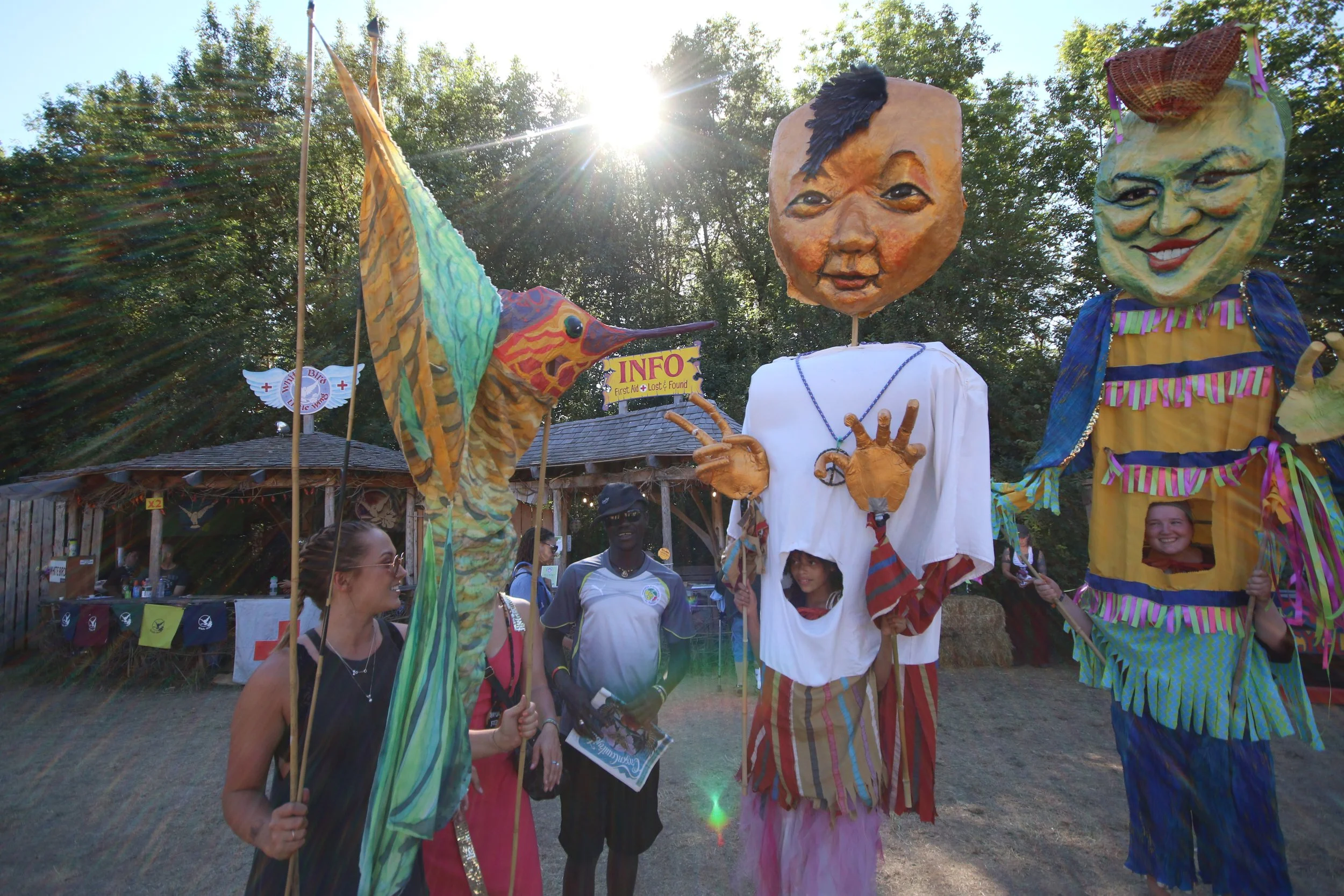
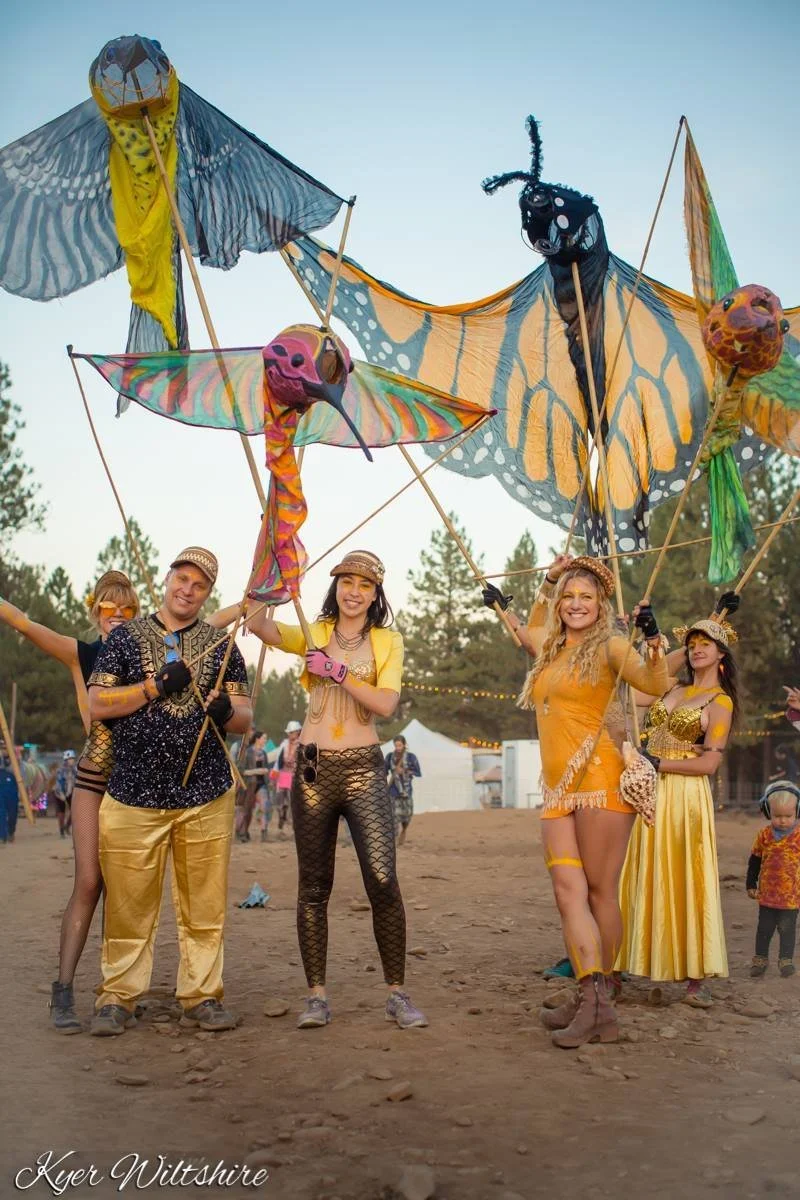
In many cultures, hummingbirds are seen as messengers, carriers of joy, and symbols of endurance and presence. In this body of work, they serve as living, moving memorials—appearing in stage performances, festivals, parades, and immersive installations as quiet, luminous presences that move through space and crowd like living light.
Two hummingbirds are currently in active performance, with more in the series in development.
Materials & Construction
The Hummingbirds combine lightweight sculptural techniques with fine textile work:
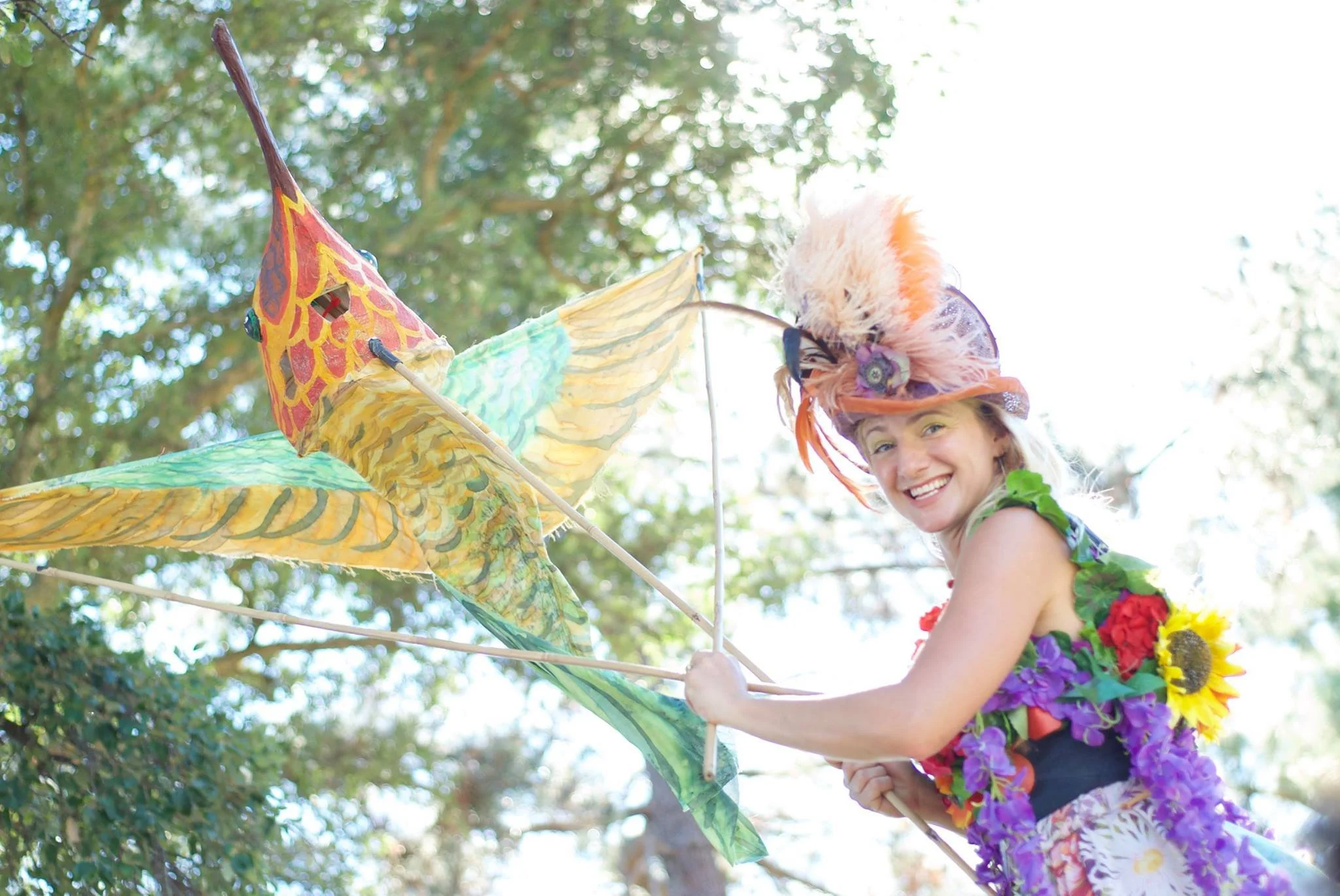
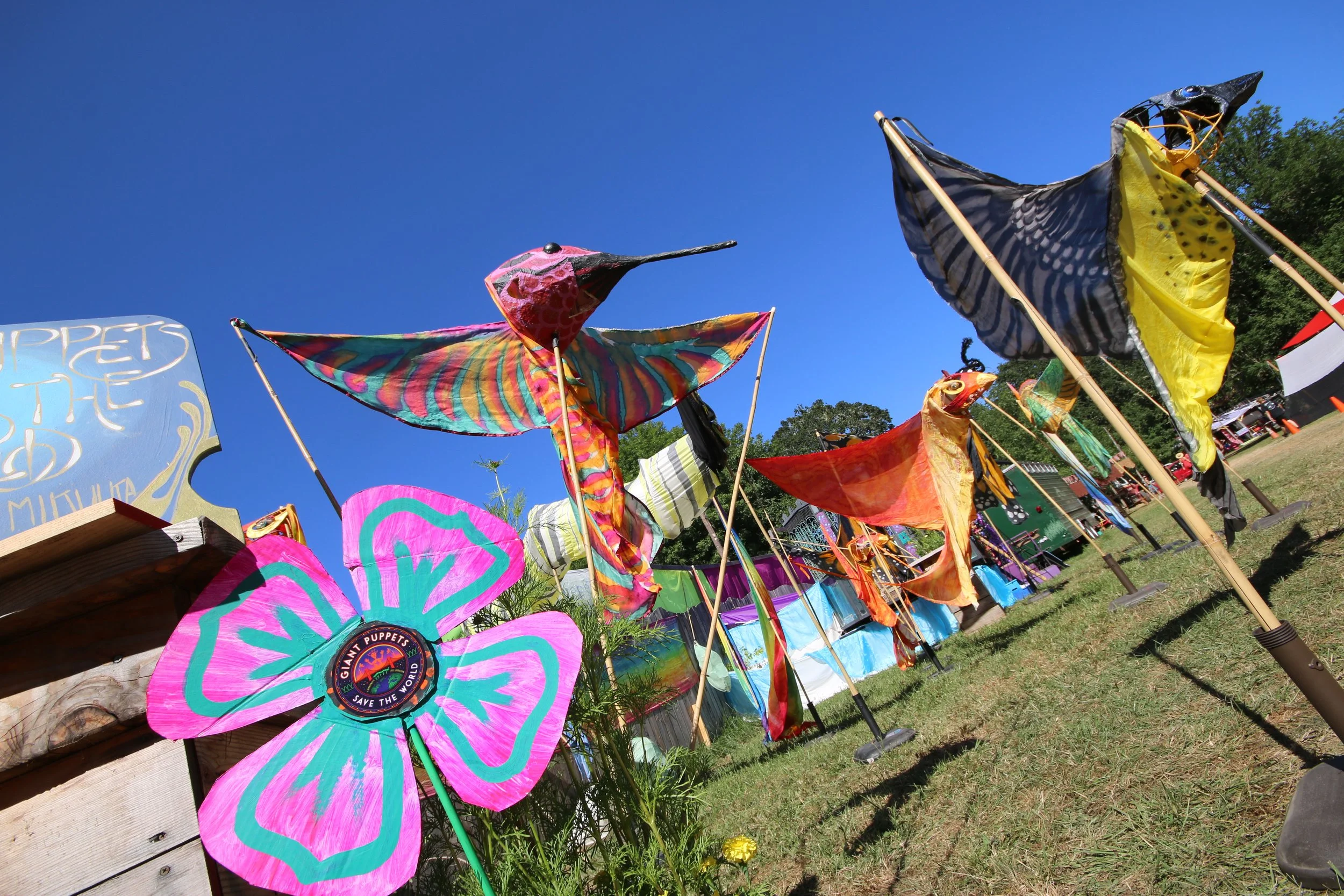
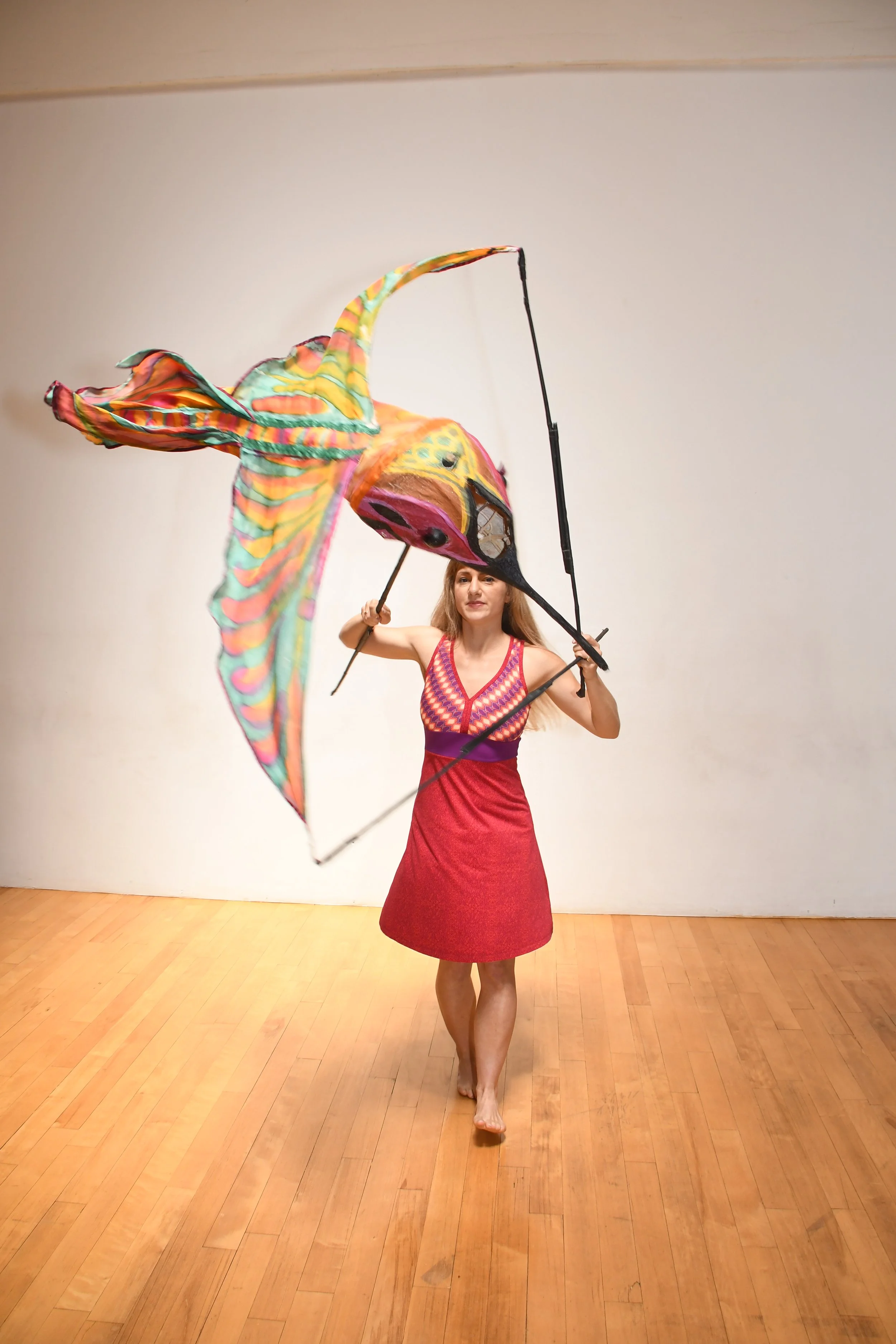
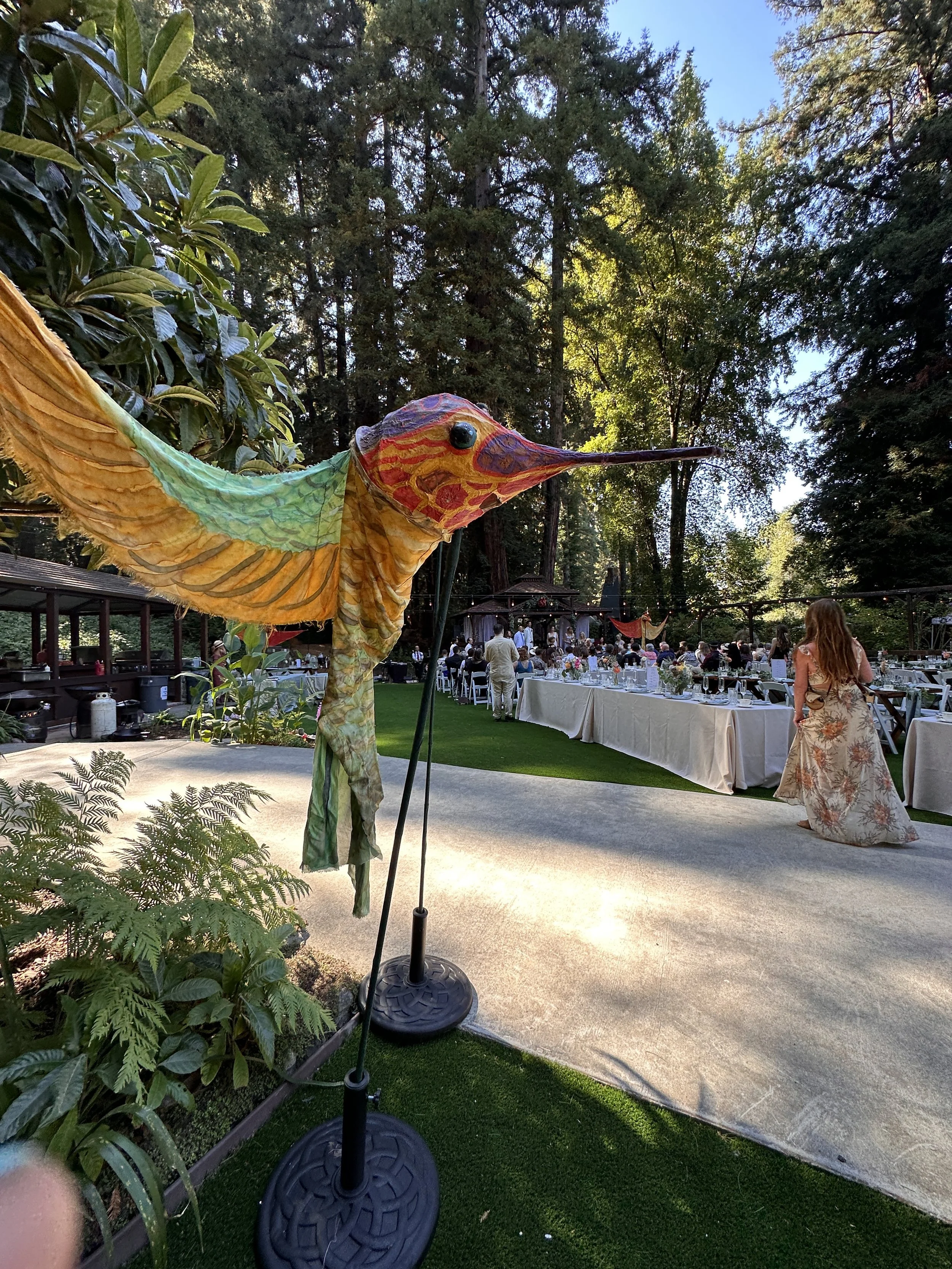
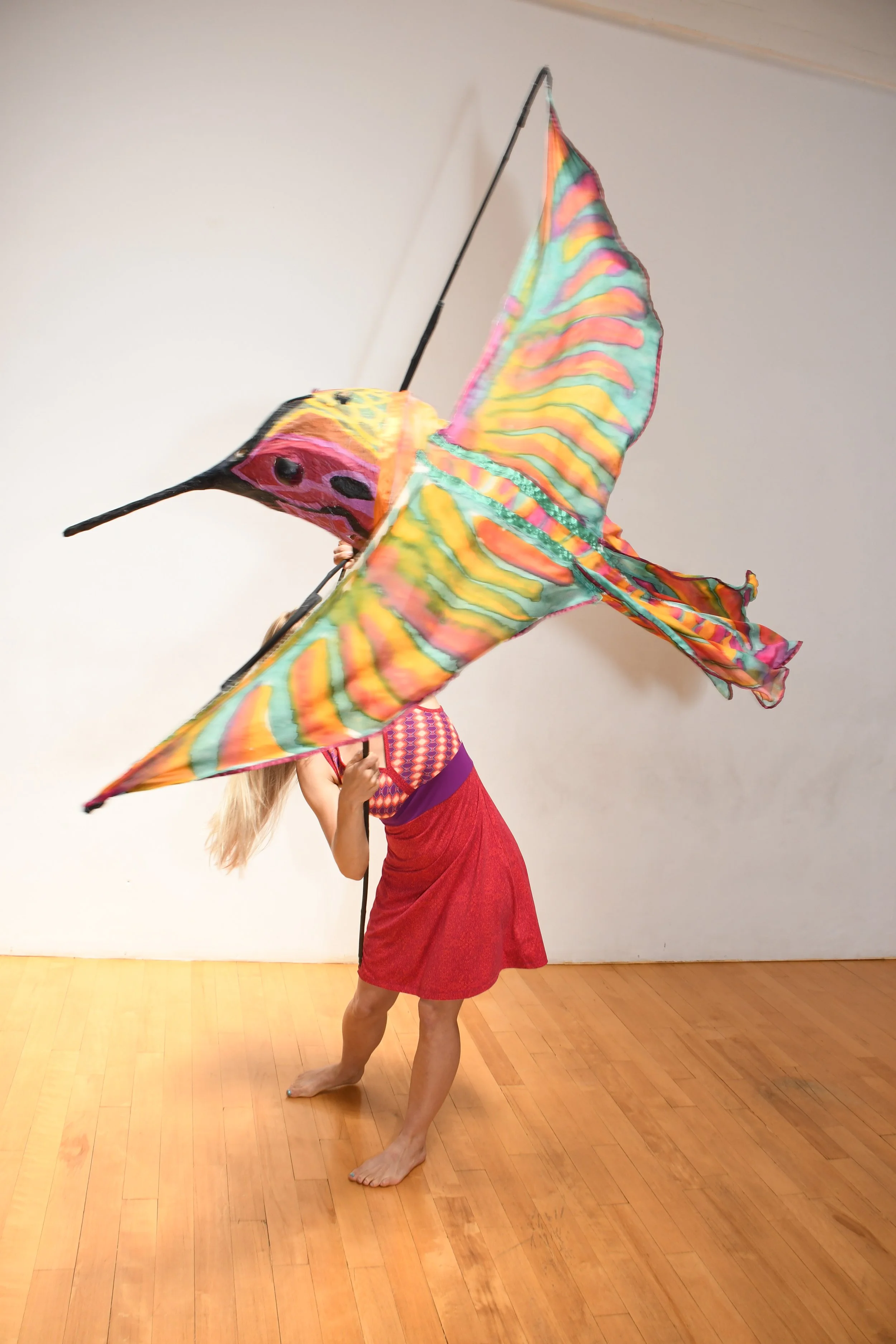
Wings and body: Made from hand-painted silk
Heads: Sculpted from reed and papier-mâché
Structure: Lightweight internal armature designed for pole operation
The silk is treated and set to create a luminous, translucent surface that catches light beautifully, especially in evening and stage-lit performances.
Scale, Movement & Performance
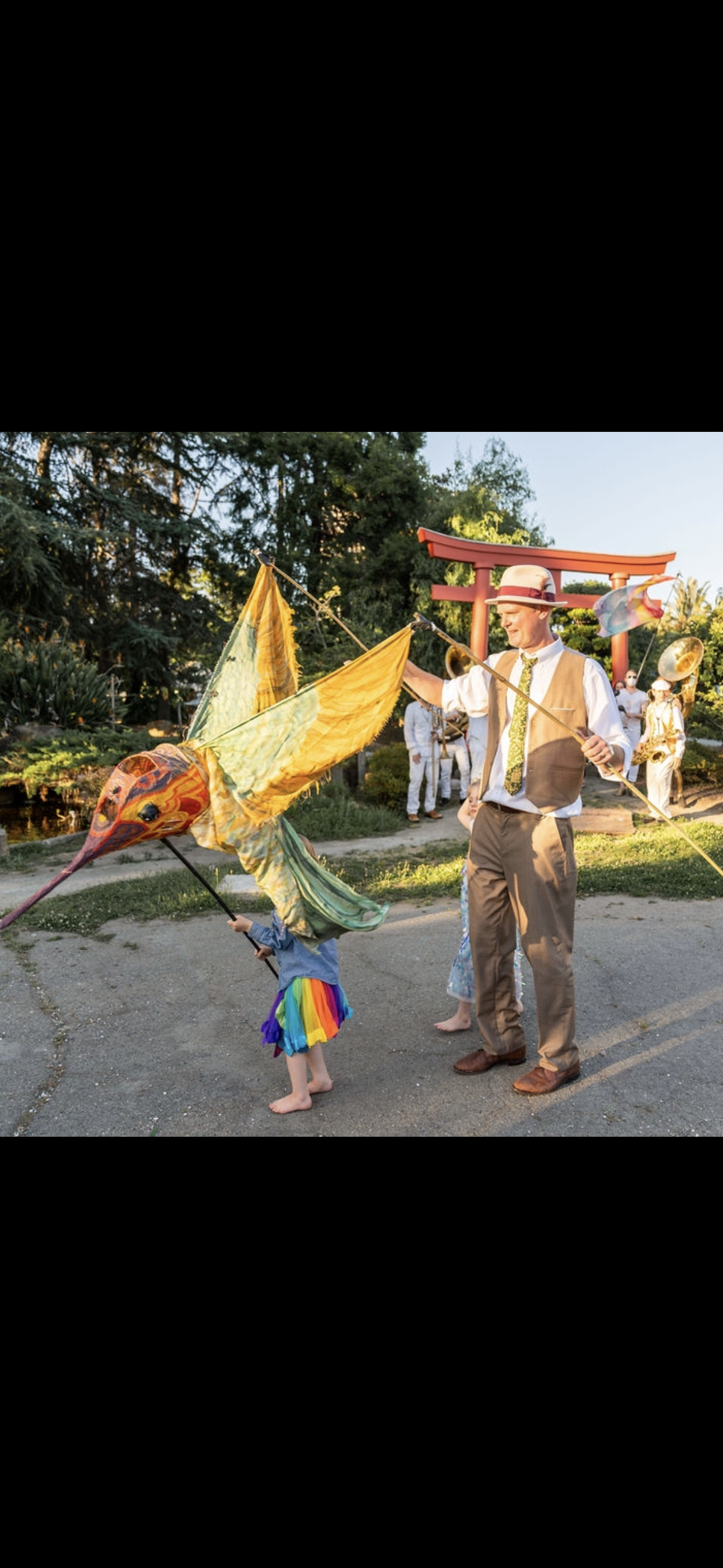
Each hummingbird has a wingspan of approximately 4 feet. They are animated using poles that are approximately 4 to 5 feet long, allowing the puppets to hover, dart, sweep, and glide through space.
Depending on the choreography and setting, each hummingbird can be puppeteered by one, two, or three performers. This flexibility allows for both intimate, delicate movement and more complex, highly animated flight patterns in larger performances.
Purpose & Ongoing Life
The Hummingbirds were created as part of an ongoing exploration of remembrance, transformation, and continuity. In performance, they often appear as quiet, radiant presences—moving between people, across stages, and through open spaces in ways that feel both grounded and otherworldly.
As part of ArtJoy’s Giant Puppets Save the World collection, the Hummingbirds continue to be used in stage works, festivals, and site-specific performances that explore grief, beauty, resilience, and the invisible threads that connect past and present.
Chrysalis Lantern
The Chrysalis Lantern is a glowing, sculptural puppet-lantern created by Toni Mikulka-Chang as part of the Monarch Butterfly lifecycle series, joining Cornelius the Caterpillar and the Monarch Butterflies in a complete narrative of transformation. The chrysalis represents the quiet, hidden, and essential stage of change—the moment when everything is reorganizing before something new emerges.
Designed to function both as a visual sculpture and as a luminous performance object, the Chrysalis Lantern brings a sense of stillness, anticipation, and wonder into installations, evening performances, and immersive environments.
Materials & Construction
The Chrysalis Lantern is built using a combination of lightweight natural materials and traditional sculptural techniques:
Structure: Formed from reed
Skin and surface: Made from architectural tracing paper and silk
Form and detailing: Shaped using papier-mâché techniques
The layered materials create a translucent surface that allows the lantern to glow from within, giving it a soft, ethereal presence in low light and nighttime settings.
Scale, Light & Presence
The Chrysalis Lantern stands approximately 4 feet tall and 2 feet wide. Its proportions make it large enough to read clearly in space while still feeling intimate and delicate.
When illuminated internally, it becomes a quiet, radiant focal point—less about movement and more about atmosphere, pause, and transformation.
Purpose & Ongoing Life
The Chrysalis Lantern was created to complete the Monarch lifecycle series and to give physical form to the often unseen stage of change. In performances and installations, it serves as a moment of stillness between the energy of the caterpillar and the expansive flight of the butterfly.
As part of ArtJoy’s Giant Puppets Save the World collection, the Chrysalis Lantern continues to be used in installations, ritual performances, and educational settings focused on life cycles, transformation, and the fragile beauty of living systems.